
Nui Chua Douc Langur: Where to See Vietnam’s Most Colorful Monkey
If you visit Vinh Hy Bay, there’s a good chance you’ll hear locals talk about the Nui Chua douc langur. This colorful monkey lives in the forests above the bay, inside Nui Chua National Park, and seeing one in the wild is a real highlight for many visitors.
What Is the Nui Chua Douc Langur?
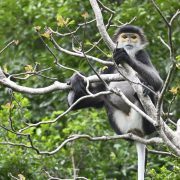
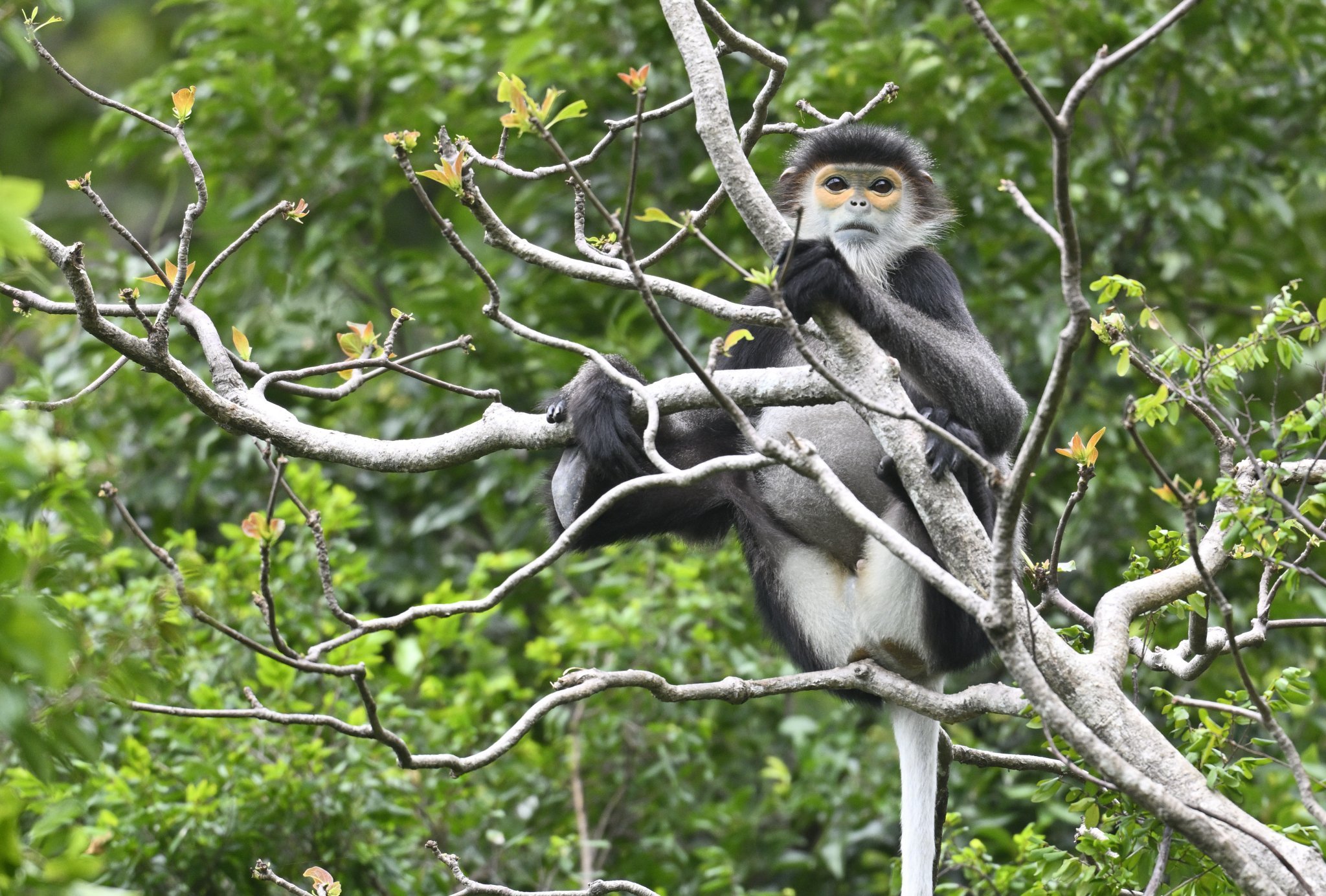
The Nui Chua douc langur (Pygathrix nigripes), also called the black-shanked douc langur, is one of the most colorful monkeys in the world. It has grey fur on its body, black arms and legs, a white tail, and a face with patches of orange and white. Many people call it the “costumed monkey” because of how it looks, almost like it’s wearing different colored clothes.
Douc langurs live in groups in the trees and rarely come down to the ground. They are shy animals, so spotting one takes a bit of luck and a quiet approach.
Where to Find the Douc Langur in Nui Chua National Park
Nui Chua National Park is one of the best places in Vietnam to see a douc langur. Thanks to years of conservation work, the park is now home to more than 2,000 douc langurs, the largest group found anywhere in the country.
Most people imagine Vietnamese jungles as green and wet. But the lower parts of Nui Chua are actually dry, with thorny bushes and cactus-like plants. This is one of the driest areas in Vietnam.
The langurs do not live down here. It lives higher up the mountain, where the forest changes into thick, green rainforest. This upper area gets more rain and has many more trees, plenty of leaves and fruit for the langurs to eat.
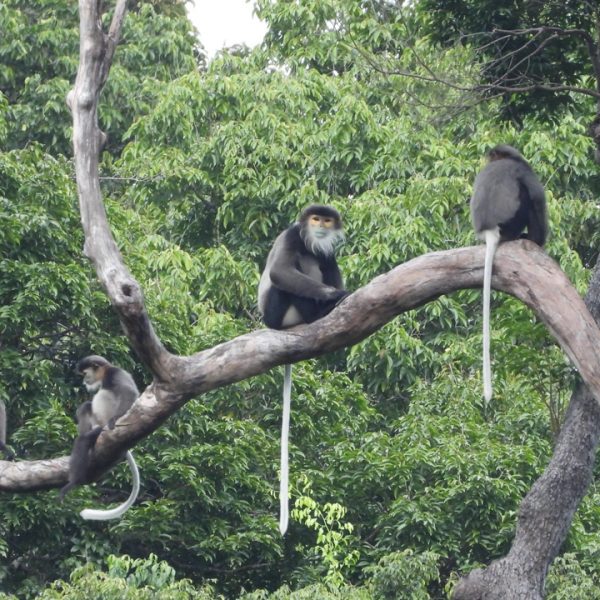
Douc Langur Family
What Do They Eat?
Langurs mostly eat leaves. This makes up the biggest part of their diet all year round. But they also eat fruit and flowers when these are available, especially during certain seasons. Researchers studying the local population found that they feed on a huge variety of plants, switching up their diet depending on what’s growing.
Are they Endangered?
Yes. The douc langur is listed as an endangered species. Across Vietnam and Cambodia, numbers have dropped a lot because of habitat loss and hunting. This is part of why the Nui Chua population is so important. With more than 2,000 individuals, this park is now seen as one of the best hopes for the species in Vietnam.
Why Nui Chua Is a UNESCO Biosphere Reserve
Nui Chua National Park isn’t just a national park, it’s also recognized by UNESCO as a Biosphere Reserve. This title is given to places with rich and unique ecosystems that are worth protecting for the whole world, not just for one country.
The presence of the Nui Chua douc langur was a big part of why the park earned this title. Having such a large population of an endangered, colorful primate living here shows just how special and important this forest is. So when you spot a douc langur in Nui Chua, you’re seeing one of the key reasons this whole area is protected on a global level.
See them on a Jungle Trek
The best way to spot a douc langur is to head into the rainforest area of Nui Chua, where they live. Our Night in the Jungle trek (2 Days, 1 Night) takes you right into this part of the park.
On this trek, you’ll walk through different types of forest, from the dry lowlands to the lush jungle higher up. Along the way, you’ll often spot the Nui Chua douc langur moving through the trees. You’ll also swim at a jungle waterfall, eat meals cooked at the campsite, and sleep in a hammock surrounded by the sounds of the forest.
If you don’t have time for an overnight trip, our Nui Chua Day Trek also passes through areas where the douc langur can be spotted. However, sightings are most common on the overnight trek, since it goes deeper into the rainforest where the langurs spend most of their time.
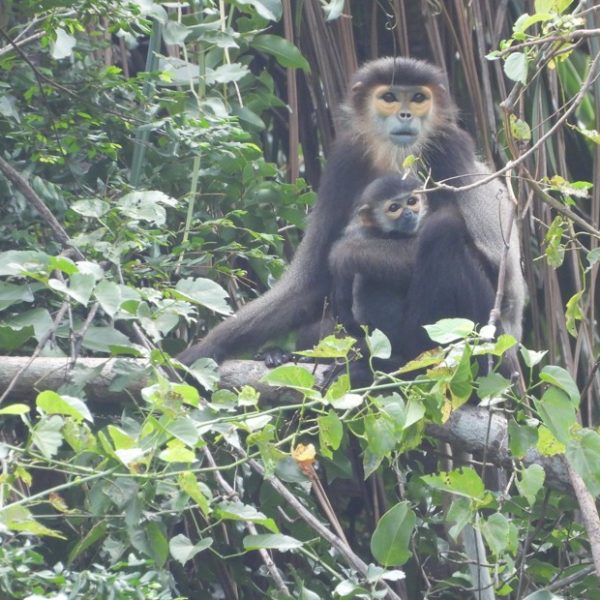
Douc Langur Mother and Child
Tips for Spotting them in Nui Chua National Park
- Go early in the morning or late afternoon, when langurs are most active
- Stay quiet and move slowly
- Bring binoculars or a camera with zoom
- Keep your distance and don’t try to feed them
- Listen to your guide, they often hear or spot the langurs first
Why It’s Worth Protecting
The black-shanked douc langur is part of what makes this national park special. Seeing one in the wild is something many travelers remember long after their trip. By visiting responsibly and supporting local guides, you’re also helping protect this rare animal and its forest home for the future.
Want to see the Nui Chua douc langur for yourself? Join our 2D1N Night in the Jungle trek and explore the heart of Nui Chua National Park.